
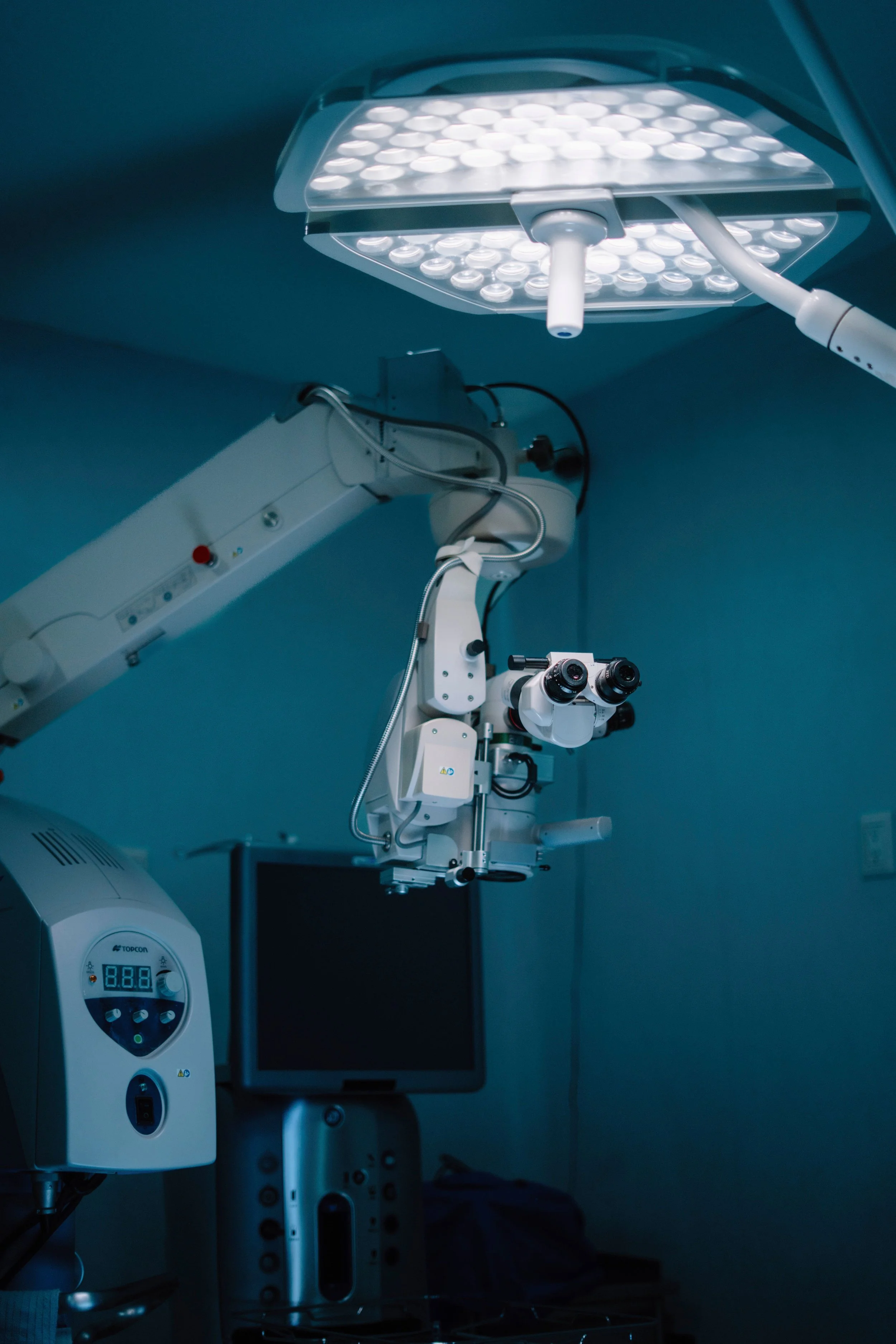
HOW AI CAN LOWER HEALTHCARE COSTS
The cost of healthcare remains one of the greatest economic burdens globally. While technology often drives up prices in other sectors due to feature bloat, the tech industry is uniquely positioned to address the root causes of inflated healthcare costs: administrative waste, diagnostic inefficiency, and reactive, rather than preventive, care.
By leveraging the power of Artificial Intelligence (AI), video calls and conferencing, and data analytics, the tech sector can fundamentally restructure our healthcare system, making it more affordable, accessible, and incredibly more effective.
A TREATMENT PLAN FOR AMERICA’S HEALTHCARE SYSTEM:
1ADDRESS ADMINISTRATIVE WASTED SPEND WITH AUTOMATIONA significant portion of healthcare spending is consumed by non-clinical, administrative tasks, such as billing, claims processing, and compliance. This "friction" represents a massive opportunity for tech-driven cost savings.
The Problem: Administrative costs account for roughly 25% of total U.S. healthcare spending, a much higher percentage than in other developed nations.
The Tech Solution: AI and Automation (RPA)
Claims Processing: AI and Robotic Process Automation (RPA) can automate the repetitive, high-volume tasks involved in processing and scrubbing claims. By quickly verifying patient eligibility, coding accuracy, and payment rules, these tools drastically reduce the costly labor involved in appeals and denials.
Specific Example: Companies are using AI-powered automation to perform eligibility verification and claims scrubbing with greater frequency and accuracy. Early adopters have reported reducing administrative costs by 20–40% in key functional areas.
Electronic Health Records (EHR) Optimization: While EHRs initially contributed to physician burnout through excessive data entry, newer AI tools are streamlining documentation. Natural Language Processing (NLP) can convert a doctor's dictated notes directly into structured EHR data, reducing the time physicians and nurses spend on paperwork and allowing them to focus on patient care.
2SHIFT FROM REACTIVE TO PREVENTIVE HEALTHThe most expensive medical events are often hospitalizations, and emergency room visits for conditions that could have been managed or prevented earlier. Tech enables a continuous, proactive model of care that keeps patients out of the hospital.
The Problem: Chronic diseases (like diabetes, heart failure, and COPD) account for the majority of healthcare spending, often due to poor adherence or late intervention.
The Tech Solution: Remote Patient Monitoring (RPM) and Wearables
RPM: Wearable devices and at-home diagnostic tools collect vital signs (blood pressure, glucose levels, heart rate) and transmit the data securely to providers. AI algorithms then analyze this continuous stream of data in real-time.
Specific Example: For a patient with heart failure, a sudden drop in a certain metric can trigger an automated alert, allowing a nurse to intervene with a telehealth call or medication adjustment before the patient's condition deteriorates to the point of needing an emergency room visit or hospital readmission. By preventing these high-cost acute events, RPM significantly lowers the total cost of care for chronic conditions.
Personalized Medicine and Genomics: Tech-driven analysis of a patient's genetic profile allows for treatments to be tailored specifically to their biological makeup, increasing efficacy and avoiding the costs associated with ineffective trial-and-error treatments.
3IMPROVE ACCESS & LOWER RISKS WITH TELEHEALTH Telehealth uses digital communication tools to deliver care remotely, effectively reducing the overhead of physical visits and expanding access, especially in rural or underserved areas.
The Problem: In-person visits incur costs for the patient (travel, time off work) and the provider (facility overhead, staffing). Furthermore, missed appointments lead to decreased care compliance, negligence, and later, more expensive interventions.
The Tech Solution: Telemedicine and Virtual Assistants
Telehealth Visits: For routine check-ups, follow-ups, and non-emergency primary care, virtual appointments significantly reduce costs. One study found that diverting members to telehealth visits for acute/non-urgent care saved an average of $242 per episode of care. Telehealth also helps reduce patient no-show rates by offering greater convenience.
AI-Powered Triage and Navigation: Virtual assistants and AI-driven chatbots can handle initial patient interactions, answering questions, scheduling appointments, and triaging symptoms. This reduces the burden on human staff and ensures patients are directed to the most appropriate, lowest-cost setting for care (e.g., a virtual visit instead of an urgent care clinic).
4ENHANCING DIAGNOSTIC ACCURACY WITH AI PRECISIONEarly and accurate diagnosis is essential for avoiding the costs of delayed treatment or incorrect procedures.
The Problem: Diagnostic errors or delays lead to poor outcomes and the need for more aggressive, expensive treatments down the line.
The Tech Solution: Deep Learning and Image Analysis
AI-Assisted Diagnostics: AI algorithms can analyze complex medical images (MRIs, CT scans, X-rays) with high precision and speed, often augmenting the capabilities of human radiologists.
Specific Example: AI tools have demonstrated superior diagnostic capabilities in identifying conditions like skin cancer or retinopathy by analyzing images using deep learning. This early and accurate detection allows for less invasive, more effective treatments, potentially reducing future treatment costs by up to 50%.
Robotic Surgery: While the initial investment is high, robotic-assisted minimally invasive surgery leads to greater precision, smaller incisions, shorter hospital stays, and faster patient recovery, which significantly lowers the overall cost of an surgical episode.
The tech industry's role is not just to introduce new gadgets, but to integrate and standardize these digital tools across the entire healthcare continuum. The ultimate success will be measured not in the revenue generated by the technology itself, but in the trillions of dollars saved and the improved health outcomes achieved by the patients it serves.

THE ML-DRIVEN REVOLUTION: REAL-TIME AUDIENCE SEGMENTATION
An ML model acts as a constant observer, processing every user signal: searches, content interaction, app activity, scroll depth, time-on-page, and even subtle cursor movements. Instead of forcing users into predefined categories, ML groups users dynamically based on their evolving behavior right now.
This process involves 3 steps:
Continuous Data Stream Analysis
ML algorithms rapidly ingest massive amounts of behavioral data. This data is granular—for example, "visited page X, then searched for product Y, then watched 75% of video A, all within five minutes."
Adaptive Grouping or Clustering
ML utilizes clustering to identify emerging patterns without fixed rules. If a group of users suddenly displays similar, high-intent signals (e.g., intense feature comparison for a specific product), a temporary and highly relevant "micro-segment" is created instantaneously.
Immediate Activation
Once these dynamic groups are formed, they are instantly available for ad targeting. This means a user exhibiting strong, real-time signals for "an upcoming trip to Cancun" can be immediately served an ad for a Cancun travel package, regardless of their last historical interest being "gardening supplies."
LEVERAGING MACHINE LEARNING FOR HYPER-TARGETING
From Real-Time to Predictive Advertising
Machine Learning (ML) is fundamentally changing audience targeting, allowing brands to move beyond static segmentation and into a world of hyper-relevance and foresight.
Real-Time & Hyper-Relevant Targeting
ML allows for dynamic audience segmentation that reacts instantly to current user behavior.
IMPACT FOR BRANDS
Hyper-Relevance
Ads are served when they are most contextually appropriate, dramatically boosting engagement rates.
Reduced Ad Waste
Focus your spend on users who are demonstrably interested right now, not those who showed interest historically.
Audience Discovery
ML identifies valuable, niche audiences that are often overlooked by traditional human analysis.
FORCASTING FUTURE INTENT
THE POWER OF PREDICTIVE ADVERTISING
ML's true potential lies in shifting advertising from reactive to predictive by analyzing complex patterns to forecast the users’ future intent and buying behaviors.
HOW ML PREDICTS FUTURE BEHAVIOR
Pattern Recognition
Models train on vast datasets of user journeys—including successful conversions and drop-off points—to learn the subtle sequences of actions that precede a specific outcome (e.g., a purchase or subscription).
Probabilistic Scoring
The model continuously assigns a "probability score" to active users for various future actions. Example: "User X has an 85% probability of buying a smartphone in the next week."
Predictive Behavior Scoring (e.g., pLTV)
Predictive Lifetime Value (pLTV) is a key application. ML analyzes a new customer's initial interactions to forecast the total revenue they are likely to generate over their relationship with the brand.
Application:
Bidding strategies can be aggressively tailored: High-pLTV users justify a higher Cost Per Acquisition (CPA), while low-pLTV users may receive less aggressive bids or different offers.
IMPACT FOR BRANDS
Proactive Acquisition
Capture demand earlier by targeting users before they even begin actively searching for a product.
Optimized Spending
Achieve higher budget efficiency by allocating resources to users statistically most likely to convert and provide high long-term value.
Reduced Churn
Predict which users are at risk of leaving before they churn, enabling timely intervention with retention campaigns.
THE FUTURE OF AUDIENCE SEGMENTATION
The era of rigid, manual audience segments is over. By embracing the capabilities of real-time dynamic segmentation and predictive intent modeling, advertisers can unlock unparalleled levels of personalization, efficiency, and ROI.
What are your thoughts? Have you begun experimenting with advanced ML in your campaigns?